Hemp-derived cannabis vaping refers to inhaling vaporized cannabinoids (primarily CBD and, since 2018, delta-8 THC) extracted from hemp plants that contain less than 0.3% delta-9 THC by dry weight. These products occupy a legally distinct space from marijuana-derived vapes: federal law permits hemp derivatives under the 2018 Farm Bill, though individual states regulate them differently, and the safety profile remains less clear than many manufacturers suggest. If you want to understand these products as a smoking alternative, check it out to learn what sets them apart, whether they’re actually legal where you live, and what research tells us about their health effects.
The appeal is straightforward. Hemp-derived vapes promise cannabinoid effects without the legal complications of marijuana in states where recreational cannabis remains prohibited. Delta-8 THC products, in particular, have surged in popularity since 2019 because they deliver mild psychoactive effects while technically deriving from legal hemp. But that technical legality creates confusion: the DEA has suggested that synthetically derived delta-8 violates the Controlled Substances Act, even as retailers continue selling it in gas stations and online.
The safety question is harder to answer. Unlike FDA-regulated nicotine vapes or state-tested marijuana products, hemp-derived vapes exist in a regulatory gap. Third-party lab testing is inconsistent, contamination with heavy metals or residual solvents has been documented in multiple studies, and the long-term effects of inhaling hemp-derived distillates remain unknown. That doesn’t mean these products are inherently dangerous, but it does mean choosing them requires more caution than many users realize.
What Hemp-Derived Cannabis Actually Means
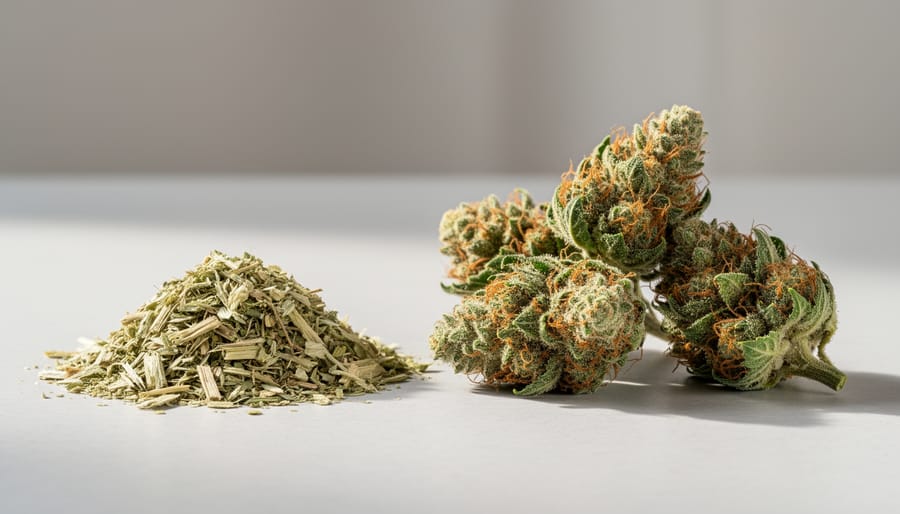
The term “hemp-derived” on a vape product label sounds straightforward, but it represents a specific legal classification rather than a botanical distinction. Hemp and marijuana are the same plant species, Cannabis sativa, but U.S. law draws a bright line between them based solely on their delta-9 THC concentration.
- Hemp
- Cannabis plants and derivatives containing no more than 0.3% delta-9 THC by dry weight, making them federally legal under the 2018 Farm Bill.
- Marijuana
- Cannabis plants and derivatives exceeding 0.3% delta-9 THC by dry weight, classified as a Schedule I controlled substance under federal law.
- Delta-9 THC
- The primary psychoactive cannabinoid in cannabis that produces the traditional “high” and serves as the legal threshold distinguishing hemp from marijuana.
- Cannabinoids
- Chemical compounds found in cannabis plants that interact with the body’s endocannabinoid system, including CBD, delta-8 THC, CBG, and over 100 others.
- Farm Bill Compliance
- Products that technically meet the 0.3% delta-9 threshold established by federal hemp legislation, though this designation doesn’t guarantee regulatory approval for all uses.
The 2018 Farm Bill legalized hemp cultivation and removed hemp from the Controlled Substances Act. This created a market for hemp-derived products, including vapes containing cannabinoids extracted from legally grown hemp plants. Crucially, “hemp-derived” doesn’t mean non-psychoactive. A product can be legally classified as hemp while containing substantial amounts of other cannabinoids that produce effects similar to delta-9 THC.
When you see “hemp-derived” on a vape product, it means the manufacturer claims the product meets federal THC limits for hemp. This classification affects interstate commerce and federal oversight, but individual states may impose additional restrictions or bans regardless of a product’s hemp status. The designation also doesn’t indicate what other cannabinoids might be present, what extraction methods were used, or whether the product has undergone any safety testing. Understanding this legal framework helps separate regulatory classification from assumptions about a product’s effects or safety profile.
The Science Behind Hemp-Derived Vaping Products
Common Cannabinoids in Hemp Vapes
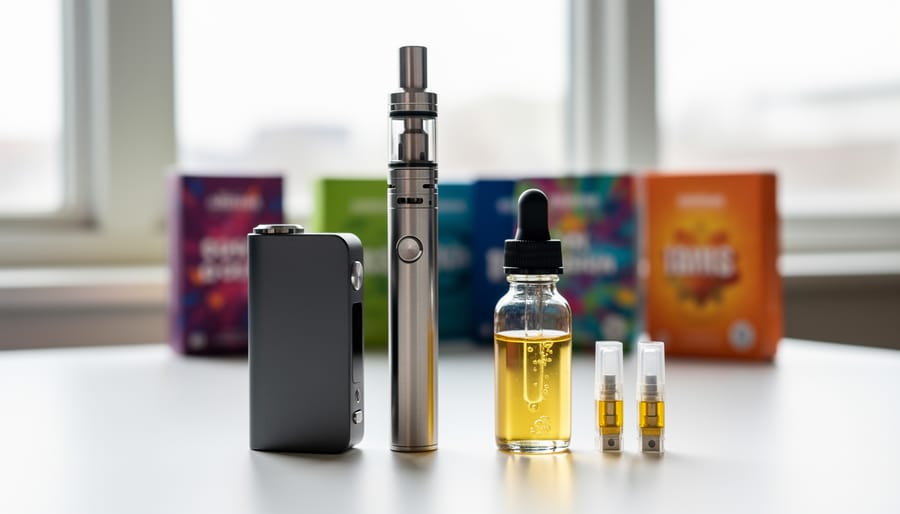
Hemp-derived vapes contain a range of cannabinoids, each with distinct properties and effects. Understanding what’s actually in these products requires looking beyond marketing claims to the compounds themselves.
CBD (cannabidiol) remains the most common cannabinoid in hemp vapes. It produces no psychoactive high and is often marketed for relaxation, anxiety relief, and pain management. While research on CBD continues, its non-intoxicating nature makes it the most straightforward hemp-derived option legally and practically.
Delta-8 THC has emerged as a controversial semi-synthetic cannabinoid. Chemically converted from CBD through isomerization, it produces a milder psychoactive effect than traditional delta-9 THC. Users report a less intense high with reduced anxiety, though the conversion process and lack of standardization raise quality concerns.
Delta-10 THC, another converted cannabinoid, allegedly offers an even gentler psychoactive experience. However, research on delta-10 is extremely limited, and products often contain minimal amounts alongside other cannabinoids.
HHC (hexahydrocannabinol) is a hydrogenated form of THC that some manufacturers claim offers stability and shelf life advantages. Its psychoactive effects reportedly fall between delta-8 and delta-9 THC, but independent research is scarce.
| Cannabinoid | Psychoactive | Legal Status | Common Claims |
|---|---|---|---|
| CBD | No | Federally legal | Relaxation, anxiety relief |
| Delta-8 THC | Yes (mild) | Gray area, some state bans | Mild high, less anxiety |
| Delta-10 THC | Yes (very mild) | Gray area | Subtle effects, focus |
| HHC | Yes (moderate) | Gray area | Stability, balanced effects |
The converted cannabinoids share a common issue: they’re created through chemical processes that weren’t part of the 2018 Farm Bill’s consideration. This creates both safety questions about conversion byproducts and legal uncertainty about whether these semi-synthetic compounds truly qualify as hemp-derived products under federal law.
Extraction and Manufacturing Processes
Hemp-derived cannabinoids begin their journey as raw plant material, typically industrial hemp biomass. Manufacturers use several extraction methods to isolate cannabinoids from the plant matter. CO2 extraction employs pressurized carbon dioxide to pull cannabinoids and other compounds from hemp, producing a relatively clean extract. Ethanol extraction uses food-grade alcohol as a solvent, which is later evaporated off. Hydrocarbon extraction relies on butane or propane, requiring careful purging to remove residual solvents.
The extracted crude oil contains a mixture of cannabinoids, terpenes, waxes, and other plant compounds. Manufacturers then refine this crude extract through processes like winterization, which removes fats and lipids, and distillation, which separates cannabinoids by their boiling points. Some products undergo isomerization or chemical conversion to create cannabinoids like delta-8 THC from CBD, a process that requires careful purification to remove reaction byproducts.
To create vape-ready oil, manufacturers must thin the thick cannabinoid concentrate to a viscosity that works with vaporizer hardware. Common thinning agents include propylene glycol and vegetable glycerin, both used in nicotine vapes. Some manufacturers use medium-chain triglyceride oil or reintroduce cannabis-derived terpenes, which also reduce viscosity while adding flavor. These carrier liquids enable the oil to flow through vaporizer wicks and coils while creating the vapor users inhale.
The manufacturing quality varies dramatically between producers, with some following pharmaceutical-grade protocols while others operate with minimal oversight or testing.
Legal Status and Regulatory Gray Areas
The 2018 Farm Bill federally legalized hemp, defined as cannabis containing no more than 0.3% delta-9 THC by dry weight. That seemed straightforward until manufacturers discovered loopholes: they could extract CBD from legal hemp, then chemically convert it into delta-8 THC, delta-10 THC, HHC, and other psychoactive cannabinoids that technically weren’t addressed in the legislation. The result is a thriving market for intoxicating hemp-derived products that exist in federal regulatory limbo.
The FDA has repeatedly stated that synthesizing intoxicating cannabinoids from hemp-derived CBD does not fall under the Farm Bill’s protections, yet enforcement remains minimal at the federal level. The DEA has issued statements suggesting these converted cannabinoids might be controlled substances, but hasn’t taken significant action. This inconsistency creates confusion for consumers and retailers alike.
State responses vary wildly. Some states explicitly ban all synthetic cannabinoids derived from hemp, including delta-8 THC. Others regulate these products similarly to marijuana, requiring licensed dispensaries and age verification. Many states have taken no position at all, allowing hemp-derived vape products to be sold in gas stations, convenience stores, and online with virtually no oversight.
This patchwork creates practical problems. A hemp vape cartridge purchased legally in one state becomes contraband when you cross certain state lines. Online retailers ship products that may violate destination state laws, and consumers bear the legal risk. Law enforcement officers may not distinguish between hemp-derived and marijuana-derived THC products during traffic stops or searches.
The regulatory vacuum also means no standardized testing requirements, no manufacturing oversight, and no quality assurance for most hemp-derived vaping products. Unlike state-licensed cannabis programs with mandatory testing protocols, the hemp-derived market largely operates on manufacturer self-regulation.
Health Considerations and Research Gaps
What Current Research Shows
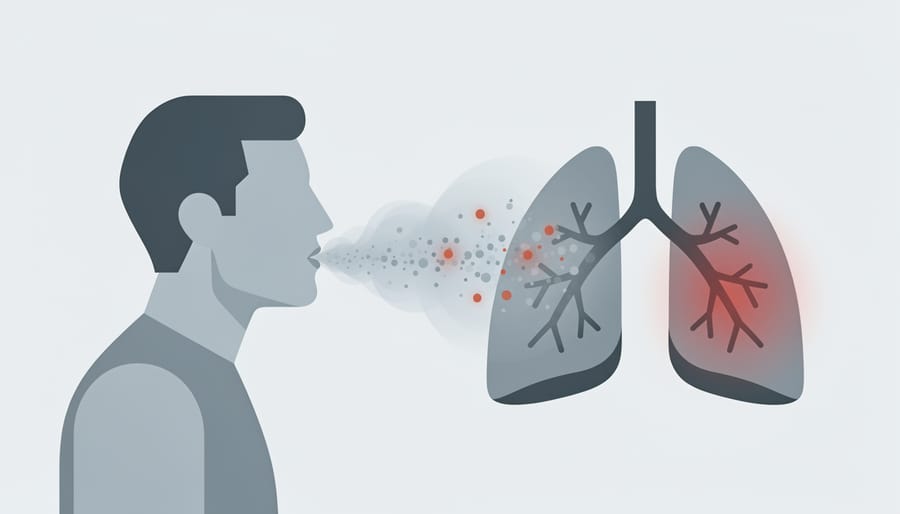
Current scientific research on hemp-derived cannabinoid vaping remains surprisingly limited, with most studies focusing on nicotine vaping or marijuana use rather than specifically examining hemp-derived products. The few available CBD vaping studies suggest potential respiratory irritation but haven’t established long-term safety profiles, a significant knowledge gap given these products’ recent market proliferation.
A 2019 Johns Hopkins study examined CBD vaping effects in controlled settings but noted the difficulty of generalizing findings to commercial products given their varied formulations. Researchers found that CBD itself appeared well-tolerated in pure form, but the study couldn’t account for the diverse additives, thinning agents, and manufacturing processes used across the commercial hemp vaping market.
What we can infer from general vaping research raises concerns. Studies examining whether does vaping damage lung tissue have documented inflammation markers and compromised immune responses in regular users. The 2019 EVALI outbreak, while primarily linked to vitamin E acetate in illicit THC vapes, demonstrated how vaping-specific contaminants can cause severe lung injury, a risk that exists regardless of whether products contain nicotine, THC, or CBD.
The research landscape suffers from a critical timing problem: hemp-derived vaping products only became widely available after 2018, meaning we lack the multi-year studies needed to assess chronic health impacts. Current evidence provides snapshots, not the longitudinal data necessary for confident safety assessments.
Contaminant and Quality Control Issues
The unregulated nature of the hemp-derived vaping market creates serious quality control problems. Unlike FDA-regulated tobacco products, hemp vapes face minimal federal oversight, leaving consumers vulnerable to contaminated products.
Heavy metal contamination poses a significant risk. Vaping devices use metal heating coils that can leach lead, cadmium, and chromium into the vapor at high temperatures. Hemp plants also bioaccumulate heavy metals from soil, meaning poorly sourced hemp may introduce additional contamination before processing even begins.
Pesticide residues present another concern. Hemp cultivation isn’t subject to the same agricultural standards as food crops in many states. When these plants undergo extraction, pesticides concentrate in the final oil. Inhaling vaporized pesticides bypasses the body’s normal filtering mechanisms, delivering chemicals directly to lung tissue.
Residual solvents from extraction processes, including butane, propane, and ethanol, can remain in finished products if manufacturing standards are lax. These solvents become particularly hazardous when heated and inhaled repeatedly.
The 2019 EVALI outbreak, which hospitalized thousands, was linked primarily to vitamin E acetate in illicit THC vapes. While most legal hemp vape manufacturers have removed this thickening agent, the incident exposed critical testing gaps. Many hemp-derived products still lack comprehensive third-party testing, and even when testing occurs, it often screens for potency rather than contaminants. Understanding the benefits and drawbacks of vaping requires acknowledging these quality control failures that continue to plague the hemp market.
Hemp Vaping Compared to Other Consumption Methods
Vaping hemp-derived cannabinoids offers a different pharmacokinetic profile compared to other consumption methods, each with distinct trade-offs worth understanding before choosing an approach.
When you inhale cannabinoids through vaping, whether from concentrated oils or dry cannabis vaping absorption happens rapidly through the lungs’ large surface area. Effects typically begin within 5-15 minutes and peak around 30 minutes, lasting 2-4 hours. This quick onset allows for easier dose titration, you can gauge effects and adjust accordingly, but the short duration means more frequent dosing for sustained effects.
| Method | Onset Time | Duration | Bioavailability | Lung Impact |
|---|---|---|---|---|
| Vaping | 5-15 min | 2-4 hours | 20-40% | Moderate risk |
| Edibles | 30-120 min | 4-8 hours | 4-12% | None |
| Tinctures | 15-45 min | 3-6 hours | 12-35% | None |
| Topicals | 15-45 min | 2-4 hours | Localized | None |
Edibles present the opposite pattern. The digestive process delays onset significantly, sometimes taking over an hour to feel effects, but results last considerably longer, often 6-8 hours. Bioavailability is notably lower due to first-pass metabolism in the liver, where much of the cannabinoid content is broken down before reaching circulation. This unpredictability makes dosing trickier for beginners.
Sublingual tinctures offer a middle ground. Absorbed partially through the mucous membranes under the tongue and partially through digestion, they typically start working within 15-45 minutes with moderate bioavailability. The dual absorption pathway creates a staggered effect profile.
Topical applications work differently entirely. They don’t enter the bloodstream significantly, providing localized effects at the application site without systemic absorption or psychoactive potential.
From a lung health perspective, edibles, tinctures, and topicals avoid inhalation risks entirely, making them preferable for anyone with respiratory concerns. Vaping introduces heated aerosols and potential contaminants directly to lung tissue, a consideration that outweighs convenience for some users.
Evaluating Product Quality and Safety
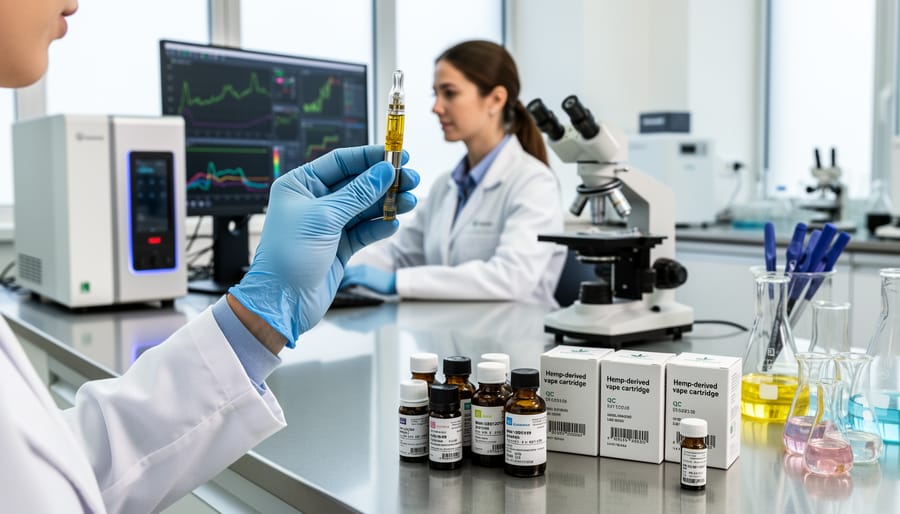
Quality assessment of hemp-derived vape products requires active scrutiny because the industry operates with minimal federal oversight. Unlike pharmaceuticals or even conventional nicotine vapes, these products don’t undergo mandatory pre-market safety reviews, placing responsibility squarely on consumers to verify what they’re purchasing.
Third-party laboratory testing represents your most reliable verification tool. Reputable manufacturers commission independent labs to analyze their products for cannabinoid content, heavy metals, pesticides, residual solvents, and microbial contamination. Request the certificate of analysis (COA) before purchasing. These documents should be batch-specific, dated within the past year, and include the product lot number matching your package. Generic or outdated COAs signal a manufacturer cutting corners.
When reviewing a COA, check that cannabinoid percentages align with label claims, discrepancies beyond 10-15% raise concerns about quality control or honest labeling. The document should explicitly state testing for contaminants, not just cannabinoid profiles. A COA listing only CBD or THC content without addressing safety contaminants tells you nothing about what you should know regarding purity.
Ingredient transparency matters equally. Labels should list all components, including carrier liquids (propylene glycol, vegetable glycerin, MCT oil), terpenes, and any additives. Avoid products with vague ingredient lists like “natural flavors” or “proprietary blend” without specifics. Vitamin E acetate should never appear, given its established link to lung injury. If a manufacturer refuses to disclose full ingredients, find another supplier.
Red flags include prices dramatically below market average, which often indicate diluted products or untested formulations. Avoid brands making medical claims, “cures anxiety,” “treats insomnia”, because these violate FDA regulations and suggest unethical marketing. Products sold in gas stations or convenience stores typically lack the quality controls of specialized retailers, though this isn’t universal.
QR codes on packaging that link directly to batch-specific test results demonstrate transparency. Manufacturers who make accessing COAs difficult, who provide only phone numbers requiring you to call for testing information, or who offer excuses about testing delays should trigger skepticism. Your health depends on knowing precisely what enters your lungs.
Who Should (and Shouldn’t) Consider Hemp-Derived Vaping
Hemp-derived cannabis vaping exists in a regulatory gray zone that demands careful personal evaluation. The decision to use these products shouldn’t be based on marketing claims or assumed safety.
Who Might Consider It
Adults already using cannabis products might explore hemp-derived vapes as a legal alternative in states where marijuana remains prohibited. Those seeking CBD for wellness purposes who prefer faster onset than edibles provide could find vaping appealing. However, this doesn’t mean vaping is inherently safe, it simply offers different pharmacokinetics.
For smokers wondering is vaping a quitting tool, hemp-derived products present additional complications. The cannabinoids themselves aren’t nicotine replacement therapies, and the act of vaping maintains the inhalation habit while introducing different unknowns.
Who Should Avoid It
Anyone with existing lung conditions, including asthma, COPD, or previous lung injuries, should avoid vaping hemp-derived cannabinoids. The lack of long-term safety data makes this particularly risky for people with compromised respiratory systems.
Pregnant and breastfeeding women should skip these products entirely. Limited research on cannabinoid transfer and developmental effects makes the risk-benefit calculation clearly unfavorable.
Young adults under 25 face particular concerns given ongoing brain development and cannabinoid sensitivity. Those taking medications metabolized by liver enzymes should consult pharmacists about potential interactions, as cannabinoids can affect drug metabolism.
The Professional Consultation Imperative
Discussing hemp vaping with a healthcare provider isn’t optional, it’s essential. Many physicians remain unfamiliar with these products’ specifics, but they can assess individual health factors, medication interactions, and whether any potential benefits justify the known and unknown risks. Self-diagnosis and self-treatment with unregulated products rarely ends well.
Hemp-derived cannabis vaping exists in a space defined more by unknowns than certainties. While these products are widely available and often marketed as legal alternatives to marijuana, the reality is far more nuanced. The legal framework remains inconsistent across states, the health effects are understudied, and product quality varies dramatically with limited oversight.
What we know: hemp-derived cannabinoids can produce psychoactive effects, extraction and manufacturing processes introduce potential contaminants, and vaping as a delivery method carries inherent risks to lung health. What we don’t know: the long-term health implications of inhaling these specific compounds, the true safety of many products on the market, and how regulations will evolve.
If you’re considering hemp-derived vaping as an alternative to smoking, understand that you’re navigating largely uncharted territory. Marketing claims about safety, legality, and effects frequently outpace actual evidence. Third-party testing provides some assurance but doesn’t guarantee safety. Legal today doesn’t mean legal tomorrow, and available doesn’t mean adequately studied.
The most responsible approach treats hemp-derived vaping products with informed skepticism. Prioritize products with transparent testing, avoid those making health claims unsupported by evidence, and recognize that choosing to vape hemp-derived cannabinoids means accepting significant unknowns. Your health decisions should be based on facts, not industry narratives designed to sell products in a regulatory gray zone.